
eNAM digital agriculture platform India impact

India’s agricultural markets have long been defined by fragmentation.
Thousands of mandis. Multiple intermediaries. Limited price transparency.
But this is changing.
With over 1,600+ mandis now integrated, the eNAM digital agriculture platform is emerging as one of India’s most ambitious attempts to unify agri trade into a single national market.
Most articles highlight the scale.
But they miss the deeper questions:
Is eNAM truly transforming trade or just digitizing inefficiencies?
What are the real benefits for farmers and traders?
Where are the gaps that still need to be solved?
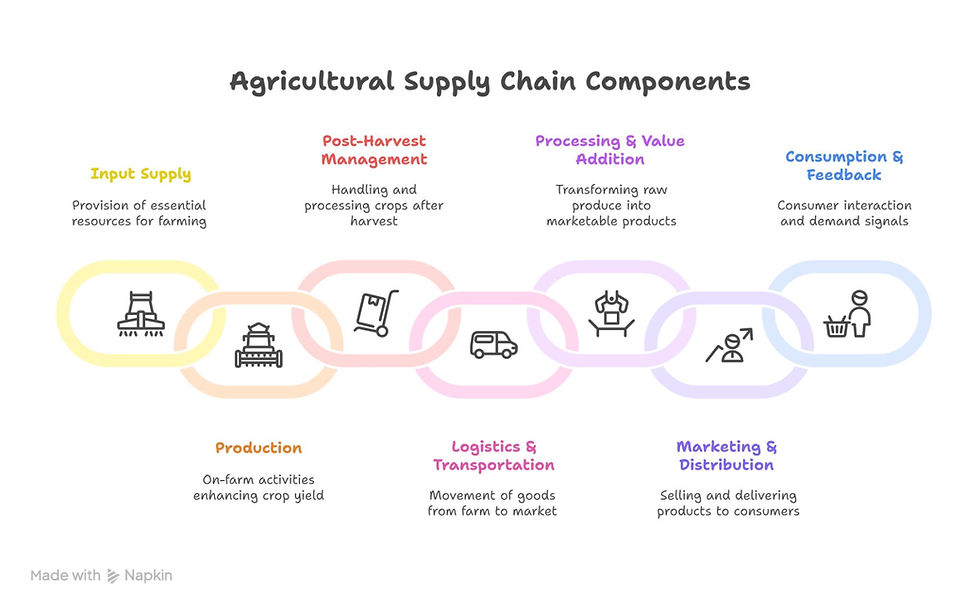
This article goes beyond surface-level reporting to deliver a complete, strategic analysis of eNAM’s impact, designed to outperform existing content and provide real insights for businesses like Invade Mill.
What is the eNAM digital agriculture platform and how does it work?
The eNAM digital agriculture platform is a government-backed online trading system that connects mandis across India to enable transparent and unified agri trade.
eNAM (National Agriculture Market) is designed to:
Digitize mandi operations
Enable online bidding and price discovery
Connect buyers and sellers across states
Instead of trading being restricted to local mandis, farmers and traders can:
Access national-level markets
Compare prices
Sell to a wider pool of buyers
Why is the expansion of the eNAM digital agriculture platform significant?
Integration of 1,600+ mandis creates the foundation for a unified national agri market. This scale matters because:
India’s agri markets are historically fragmented
Price discovery varies regionally
Market access is limited for farmers
With eNAM expansion:
Price signals become more transparent
Market reach expands
Competition increases
This is a structural shift, not just a digital upgrade.

How does the eNAM digital agriculture platform improve price discovery?
It enables real-time, competitive bidding across markets, improving price transparency. Traditional mandi system:
Limited buyers
Localized pricing
Information asymmetry
eNAM changes this by:
Allowing multiple buyers to bid
Providing price visibility across regions
Reducing information gaps
Better price discovery directly impacts farmer income potential.
Does the eNAM digital agriculture platform actually benefit farmers?
Yes, but benefits are uneven due to adoption gaps and infrastructure limitations. Potential benefits:
Higher price realization
Reduced dependence on intermediaries
Wider market access
However, ground realities include:
Limited digital literacy
Dependence on commission agents
Infrastructure constraints
So while the platform has strong potential, execution remains uneven.
What challenges are slowing the effectiveness of the eNAM digital agriculture platform?
Digital adoption barriers, logistics issues, and mandi-level resistance are key challenges. Most articles celebrate integration numbers but ignore operational realities:
1. Digital Literacy Gap
Farmers often rely on intermediaries to use the platform.
2. Logistics Constraints
Selling across states requires:
Transport
Storage
Coordination
Which many farmers cannot manage independently.
3. Resistance from Traditional Ecosystem
Commission agents still dominate
Local mandi structures resist change
This creates a hybrid system where digital and traditional models coexist.
Is the eNAM digital agriculture platform solving fragmentation or just digitizing it?
Partially solving fragmentation, but not eliminating it yet. eNAM connects markets digitally.
But physical realities remain:
Transport costs
Regional demand differences
Storage limitations
So while digital integration exists, physical integration is still evolving.
What opportunities does the eNAM digital agriculture platform create for businesses?
It opens opportunities in aggregation, logistics, processing, and data-driven trading.
1. Aggregation Models
Companies can aggregate produce at scale for better pricing.
2. Logistics & Supply Chain
Inter-state trade increases demand for logistics
3. Processing Integration
Direct sourcing from mandis
4. Data Intelligence
Price trends
Demand forecasting
This is where companies like Invade Mill can create strong advantages.
How can agri companies leverage the eNAM digital agriculture platform?
By integrating sourcing, logistics, and processing into a unified strategy. Winning strategies include:
Building mandi-level presence
Leveraging price data for procurement
Creating efficient transport networks
Integrating processing units with sourcing
This transforms eNAM from a platform into a strategic tool.
What are the risks associated with the eNAM digital agriculture platform?
Operational inefficiencies, uneven adoption, and over-reliance on digital systems.
Key risks include:
Platform underutilization
Data inaccuracies
Limited last-mile infrastructure
Policy dependency
Ignoring these risks can limit the platform’s long-term impact.
How does the eNAM digital agriculture platform impact India’s agri future?
It lays the foundation for a more transparent, efficient, and scalable agri market system. If executed effectively, eNAM can:
Improve farmer incomes
Reduce inefficiencies
Enable national-level price alignment
Attract private sector investment
But success depends on:
Infrastructure development
Policy support
Private sector participation
What gaps do current top-ranking articles miss about the eNAM digital agriculture platform?

They ignore execution challenges, business opportunities, and supply chain realities. Most articles focus on:
Number of mandis
Government initiatives
But miss:
Real farmer experience
Logistics complexity
Private sector role
Integration with processing industries
This article fills those gaps, making it more comprehensive and actionable.
How is Invade Mill positioned in the eNAM-driven ecosystem?
Invade Mill can leverage eNAM to build a data-driven, integrated agri supply chain. With strengths in:
Commodity trading
Processing
Supply chain management
Invade Mill can:
Source efficiently across mandis
Optimize procurement using price data
Build direct farmer linkages
In a digitally connected market, integration becomes the biggest advantage.
Conclusion
The eNAM digital agriculture platform is not just a government initiative.
It is a structural shift in how India trades agricultural commodities.
But its success will not be defined by:
Number of mandis onboarded
It will be defined by:
Efficiency of execution
Depth of adoption
Integration with real-world supply chains
The future of Indian agriculture lies at the intersection of:
Digital platforms + physical infrastructure + intelligent businesses
And those who can combine all three will lead the next phase of agri transformation.


Comments